
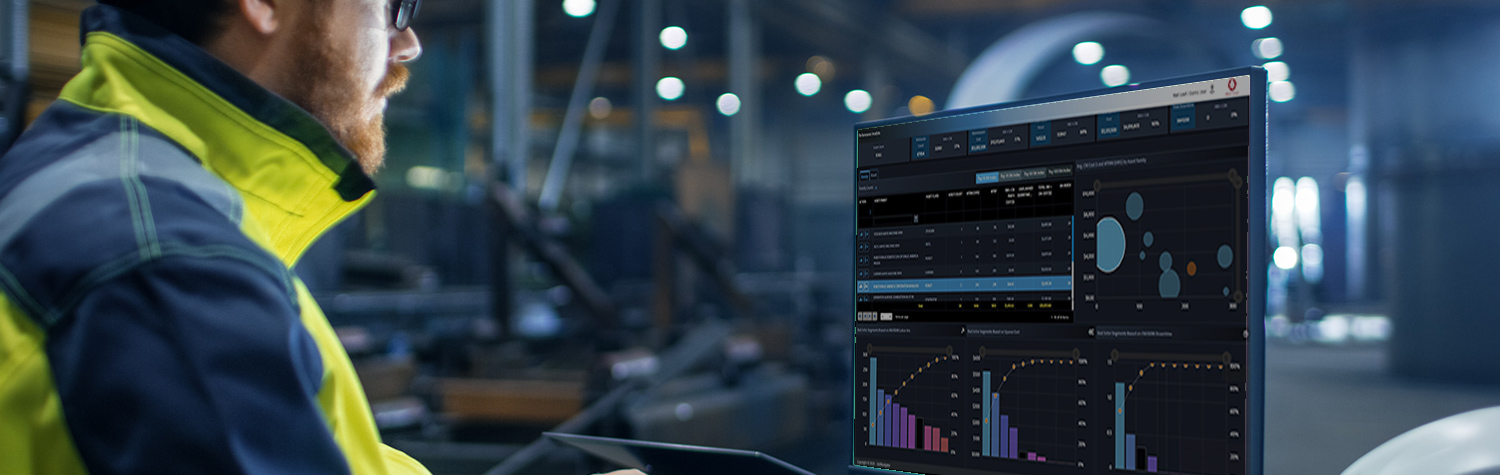
Analytics-Driven
Reliability Improvement
Streamlined technology software, processes,
and training, delivering total control
over managing the lifecycle of your assets
AT A GLANCE
Asset Analytix Solutions
The Asset Analytix team represents full-scale, diverse subject matter expertise for a complete end-to-end solution across your entire organization involved with Enterprise Asset Management.
Our Analytics-Driven Improvement Management System provides everything needed from detailed problem identification/verification, solution design, training, coaching, 360Navigator Technology Software, and the essential services around reporting and analytics for sustainable change.
PMO Impact Spotlight
PM Baselining and CMMS Assessment Special Offers for IMC Attendees
 Asset Analytix is pleased to offer two powerful solutions to evaluate the most critical aspects of your Reliability and Asset Management program and a Deep-Dive Baselining training event for your PM Program.
$372,000 Impact in Just 4 Days
A Fortune 100 company achieved massive savings on labor, parts, scheduled downtime, and total cost-to-maintain through our proprietary real-life Blended PM Optimization exercise. Check out our interactive whitepaper to see how that was accomplished.
CONTROL AT YOUR FINGERTIPS
EAM Program
Reporting & Analytics
Ready for use analytics. Taking your EAM measures and reporting efforts to a whole new level for total control.
ESTABLISH AN IMPROVED RISK INDEX
Criticality
Management
A complete, end-to-end system for calculating and managing criticality of assets, parts and capitol to close risk.
PMOPTIMIZATION MADE EASY
360 Full range
PM Optimization
Self-guided system drives out waste & Improves reliability. Results in efficient and effective asset strategies.
FULLY AUTOMATED ASSESSMENTS
Precision EAM
Assessments
Our Precision Assessment System is completed on-line with guidance and real-time analytics. Discover the power of this next generation approach to baselining, benchmarking and strategy development.
DATA, STRUCTURE, AND USAGE
CMMS Program
Optimization
We discovered a way to perform an evaluation on the quality of data, areas for improvement and the practices and policies that lead to the problem. Maximize the strength of your CMMS.
IMPROVE THE VELOCITY OF WORKFLOW
Work Management
Optimization
Our process identifies and analyzes the velocity of workflow and manageable items that limit your effectiveness and efficiency with results that lower the overall costs of your maintenance & reliability efforts.
ACCELERATE YOUR TEAM'S RESULTS IN THE SHORTEST TIME
Focused Consulting Services
Our teams vast experience will help you design, fine-tune and deploy your most critical activities, achieving your objectives in a fraction of the time, leaving you the valuable time to run your organization.
- Corporate, CoE Program Design
- Recapitalization Analytics
- TPM Operational Reliability
- Reliability Engineering
- Asset Health Assessments
GREAT REVIEWS FOR OUR SERVICES
Real Results
Client Praise
Advanced Skill Development!
My team who have never been trained in FMEA or RCM were actually doing it in our second session and they didn’t even know it.
MANAGER OF RELIABILITY
Petro Chem
Connecting the Dots
The measures framework is the most intuitive process that tied EVERYTHING together. For the first time we can see the relationships in all we do.
DIR. OF MAINTENANCE EXCELLENCE
Pharmaceuticals
Reporting - Super Charged!
Your team provided all the missing pieces in our reporting and analytics project, helping our IT team and accelerating our results.
ASSET MANAGER
Water Reclamation










ASSET ANALYTIXHeadquarters
Contacting us is the shortest path from localized initiatives to systemic maintenance productivity improvement.
OUR LOCATIONSWhere to find us?

ASSET ANALYTIXHeadquarters
Contacting us is the shortest path from localized initiatives to systemic maintenance productivity improvement.
OUR LOCATIONSWhere to find us?
GET IN TOUCHAsset Analytix Social links
Connect with us through LinkedIn.
© Copyright 2022 by Asset Analytix. All rights reserved.
© Copyright 2022 by Asset Analytix. All rights reserved.